
Root Knot Nematodes
Just when you feel your garden is off to a great start for the Summer, there can be humbling new experiences that catch even the most experienced gardeners off guard. I now have Root Knot Nematodes in my raised beds. It’s taken me weeks, and 3 dead cucumber plants, to figure it out. And looking back I think I had them last summer too.
Root Knot Nematodes are microscopic eel-like roundworms that are destructive in the vegetable garden to a multitude of plants. Too small to be seen without a microscope, the problem sneaks up on you unaware as the symptoms on your plants mimic other problems, that once diagnosed its too late. The only way to confirm you have them is to dig up and examine the roots.
Nematodes burrow into the roots of the host plant inhibiting its ability to uptake water and nutrients. They prefer warm soil so you can have problems in the summer with squash, tomatoes and cucumbers. As the soil cools for fall and winter cool season plants like broccoli, beet, cabbage, mustard, garlic, onions etc. are less likely to be affected.

This cucumber appeared to be healthy, a vivid green just a week ago, aside from the standard leaf miners and some bacterial infections, it was producing cucumbers. I missed the first indicator though that something was amiss, the leaves would droop at the first heat of the day even when well-watered.
Within a week the entire plant was yellowing, like it was lacking nutrients. I had just applied liquid fertilizer days before, so I knew that it couldn’t be the cause.
Guessing that this one of two last surviving cucumber plants was likely infected, I figured there was nothing to lose. The entire plant was on track to be completely dead in the coming weeks. So I pulled it and examined the roots. The galls on the roots confirmed my suspicions.

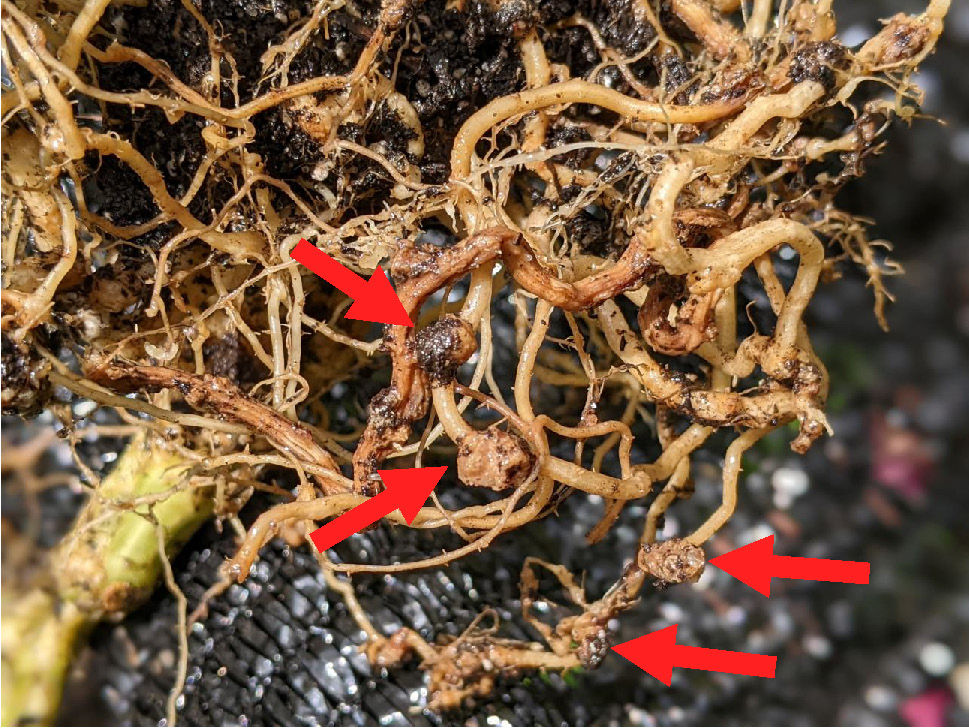
Once you pull the plants, you will see bumps on the roots. These are called galls. These distinctive swellings damage the water- and nutrient-conducting abilities of the roots.
An additional symptom that is an indicator, besides the yellowing leaves and wilting, is an overall loss of vigor. It will grow more slowly than neighboring healthy plants, beginning in early to midseason. Plants will produce fewer and smaller leaves and fruits, and will eventually die. Kinda a slow painful loss to watch, and a misdiagnosis for weeks as it gets worse, like me! At first, I thought the cucumbers had Verticillium Wilt, like what has afflicted my tomatoes this season, which is just as bad.
Root Knot Nematodes survive from season to season primarily as eggs in the soil. So once you have them, they are hard to eradicate. But there is hope, and we gardeners don’t give up that easily!
While difficult, there are methods to take to manage nematodes. The most reliable practices are preventive, including sanitation and choice of plant varieties. You can reduce existing infestations through fallowing, crop rotation, and soil solarization.
Fallowing involves leaving the infected area unplanted for an entire season, including weeds. It is important to keep the soil moist during this time to induce egg hatch and to remove weeds on which nematodes can survive. This way the eggs will hatch, but the nematodes will die if there is nothing to feed on. You will need to repeat fallowing if you see symptoms again, nematodes can repopulate in a single season. A good plan is to rotate fallowing on 1/3 of your garden each season.
Crop rotation is important in the garden to manage many diseases and pests, and it applies here too. The same location or container bed should not have the same plants year after year.
You can use solarization to temporarily reduce nematode populations in the top 12 inches of soil. Water the soil well and cover with clear plastic for 4-6 weeks in the hottest time of the summer. This will kill off nematodes and other pathogens. While it will also kill off good ‘bugs’ too, those will return (but so do the nematodes eventually).
At the end of the summer season make sure to remove all roots and debris from your garden and discard these. Do not place effected plants in your compost pile.
As a last resort, if you have raised beds, you can replace the soil. This can be costly and labor intensive. But if you have only a few vegetable beds and you can’t give up a season to fallowing or solarizing, and no options for crop rotation, then soil replacement might be your best option. Dig to the depth of 12 inches if you have in-ground beds, or remove all soil from fully enclosed beds. Clean the empty bed frame thoroughly and refill with newly purchased soil.
One other last resort I’m testing in my garden. I have applied a Neem oil soil drench to the last few cucumbers I have in the same effected beds. The jury is out whether this will work or not, and a risk of possibly harming beneficials. I’ll update this post in the coming weeks. If you want to try this, be sure to follow the manufacturers instructions on the bottle label.
This all sounds a bit daunting, and I know if feels like it’s always something to overcome in the garden. But with patience and time you can conquer these unseeable foes. And I am determined to have cucumbers this season!
....2 days later I discovered Nematodes had gotten to my carrots in another bed. I have a much bigger infestation on my hands!


Comments